Create your program
Name it, pick how many stamps earn a reward, describe the reward. Buy nine coffees, get the tenth free — whatever already works for you.
Buy 9, get the 10th free
Digital loyalty · built for local
The Usual is a digital punch card for local businesses. Customers keep your card on their phone, next to every other local shop they visit, and your staff scan it at checkout. No new point-of-sale, no hardware, no retraining.
The demo is the real application, running in your browser. Nothing to install.
The problem
Customers lose them. Staff forget to stamp them. You never find out which regulars stopped coming, because a paper card can't tell you anything. And the loyalty tools that can are bundled into a POS you'd have to replace your whole counter to use.
The fix
Print one code and put it by the register. Customers scan it once to join. From then on your staff scan their phone at checkout — one tap, one stamp — and you can see exactly who's coming back and who isn't.
How it works
Three steps, no integration work, and nothing to plug into your register.
Name it, pick how many stamps earn a reward, describe the reward. Buy nine coffees, get the tenth free — whatever already works for you.
You get a printable enrollment code. Customers scan it once to join. It only enrolls — it can't award stamps, so nobody can stamp themselves.
The customer shows their code, your staff scan it, one tap adds the stamp. When they hit the threshold the reward appears on their phone automatically.
Why it's different
The things below aren't features we plan to add. They're decisions baked into how the system records a stamp.
A customer's code changes every 60 seconds and works once. A screenshot of someone else's phone is worthless — which is not true of loyalty apps that give each customer one permanent code.
Nothing increments a counter. Each stamp is a permanent entry with the employee, the location and the time, so a balance can always be explained — and an undo is a correction, not a deletion.
Staff tap twice on bad café wi-fi constantly. Every scan carries a unique key, so the second attempt is recognized and ignored instead of quietly giving away a free coffee.
No new terminal, no card reader, no integration project. If you switch POS next year, your loyalty program and your customer list come with you.
Customers don't download an app per shop. They keep your card alongside the barber and the car wash, which is why they actually open it.
Repeat visits, time between visits, who's gone quiet. The thing a paper card can never tell you, and the reason to bother going digital at all.
Built for local
The tenth coffee, the fifth oil change, the eighth cut — whatever your counter's version of "the usual" is, it fits on one card.
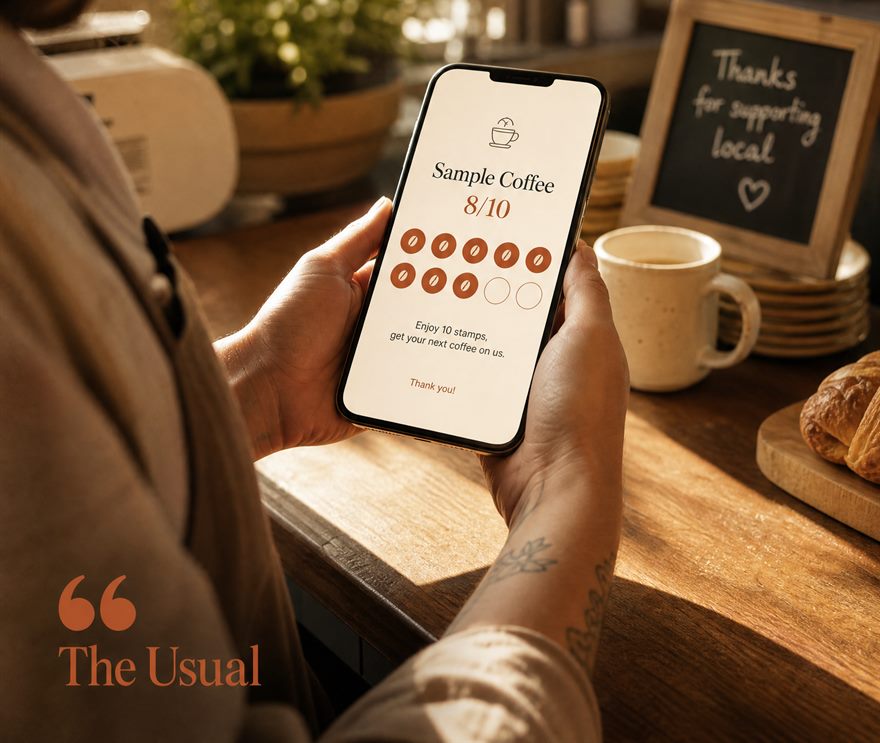
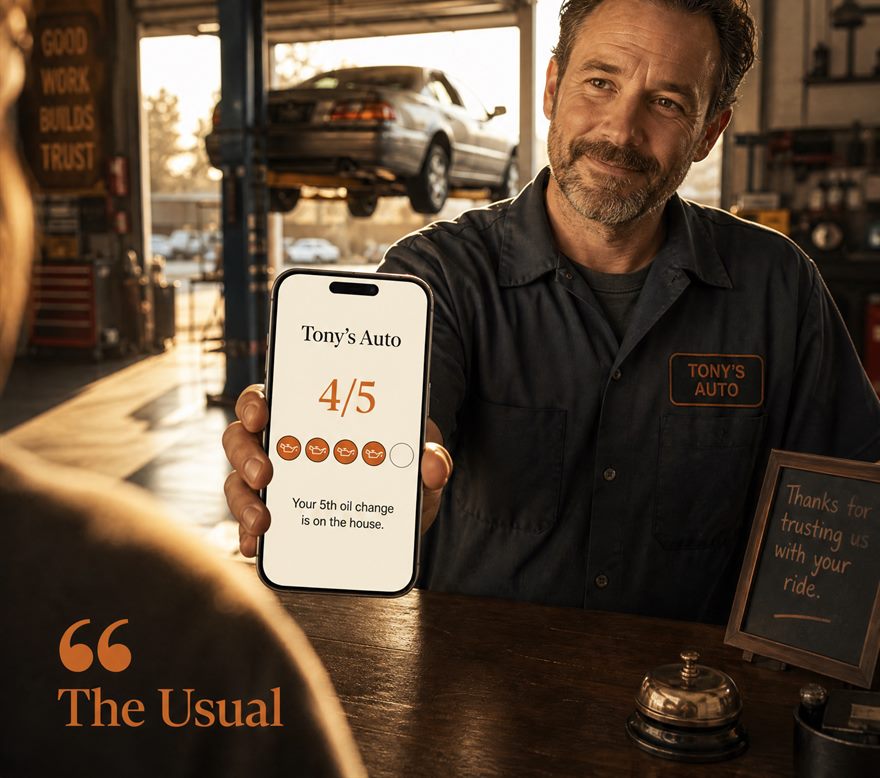
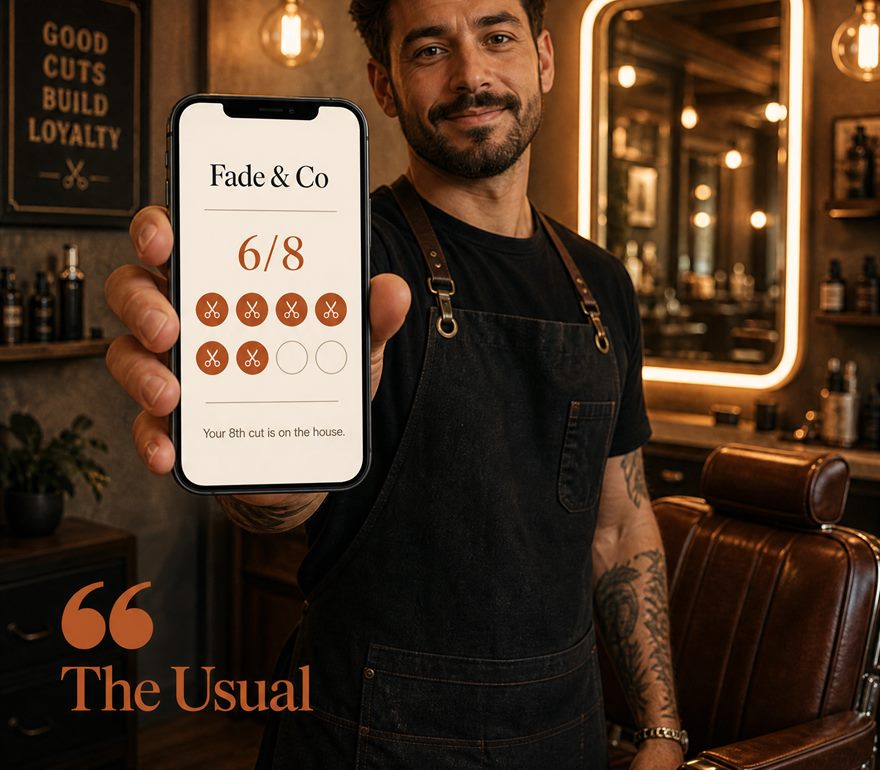
Also built for restaurants, delis & bakeries, food trucks, hair & nail salons and farmers markets.
Farmers markets
Vendors can run their own card at their stall today, scanning from their phone. This winter we're adding a market-wide card: shoppers' visits count at every stall, and after a set number of market days they get a coupon to spend with any vendor.
Under the counter
This is the actual transaction log behind a loyalty card. It's what makes a disputed balance answerable, and what turns "I think Sarah comped her friends" into something you can check.
Visible in the demo — add a stamp and watch the entry appear.
| Event | Staff | Balance | Result |
|---|---|---|---|
| stamp.added | Sarah | 9/10 | OK |
| stamp.duplicate | Sarah | 9/10 | IGNORED |
| stamp.added | Sarah | 10/10 | OK |
| reward.minted | system | 0/10 | CREATED |
| scan.rejected | Marcus | — | EXPIRED |
| reward.redeemed | Marcus | — | OK |
Pricing
No percentage of your sales, and no long-term contract. Cancel whenever you like and export your customer list on the way out.
For single-location small businesses.
For growing businesses and small multi-location operators.
14-day free trial. No long-term contract. What counts as a location, a staff account and a program
Questions
A stamp-style loyalty card that lives on the customer's phone instead of in their wallet. Your staff scan it at checkout to add a stamp, and the reward appears on the phone when the card is full. More on how they work.
$30 a month for one location (Basic) or $50 a month for up to five (Pro). Customers use it free. There's a 14-day free trial, no contract and no percentage of sales. See pricing.
No. The Usual runs beside whatever you already use. Your staff open it on a phone or tablet and scan the customer — the register is untouched. That's deliberate: switching POS is the reason most loyalty programs never get started.
No. They scan your code with their phone camera and the card opens in their browser. They make a free account once, and the same account holds every card from every local business on The Usual.
No. The code you display only enrolls people; it never awards a stamp. Stamps can only be added by a signed-in member of your staff, and the customer's own code expires after a minute, so a saved screenshot doesn't work either.
Scanning needs a data connection, and there's no offline mode yet. If a scan fails, scan again: a retried scan is recognized and never counted twice. If your Wi-Fi is unreliable, a phone on cellular data makes a good backup scanner.
You do, for your own program. If you cancel, you can export the customers who joined at your business. What we won't do is hand your customer list to another merchant.
Fill in the form and we set your business up with you. Building your first program takes about five minutes. Printing the code and putting it by the register is the slow part.
Yes. Vendors can run their own card at their stall today, scanning from their own phone. A market-wide card, where shoppers' visits count at every stall and the market's coupon works with any vendor, launches for the 2026–27 winter season. See farmers markets.
See it working
Not screenshots — the actual application. Join a program as a customer, then switch to the merchant side and stamp yourself. Two stamps gets you a reward.
Founding businesses
Tell us about your business and we'll set your first program up with you — free while we onboard our founding group. No card, no contract, about five minutes of your time.
We reply the same day. Your details go to our team only — never to other merchants.
Thanks for being usual
Your signup is with our team and we'll reach out the same day to set your program up. In the meantime, the demo is the real application — try both sides of the counter.